
















Four Clear Signals
It’s Time for a UX Audit
Identifying and fixing usability issues early is critical to improving your website’s performance and supporting long-term growth. A UX audit and improved user experience can uncover:
Underperforming expectations
Your website gets traffic, but visitors don’t convert into customers or registered users. This usually means usability or UX issues are blocking conversions.
Low conversions
Users frequently abandon the purchase or registration flow due to confusing layouts, unclear messaging, or unnecessary steps.
Declining sales
Traffic may be stable or growing, but conversions are dropping because usability issues make it harder for users to complete key actions.
Usability complaints
Customers report problems using the website or say information is unclear, reducing trust and repeat visits.
What Is a UX Audit?
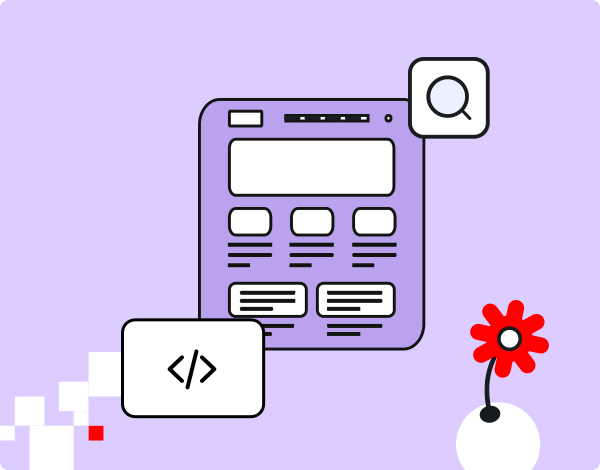
A UX audit (user experience audit), sometimes called a website usability audit, is a structured analysis of how users interact with your website. Its goal is to identify usability issues that reduce engagement and prevent conversions such as purchases, registrations, or key interactions.
We analyze your website’s structure, design, content, and functionality to uncover UX gaps and provide clear, practical recommendations. The focus is on improving usability, increasing conversions, and supporting measurable business outcomes.
What Does a Website UX Audit Involve?
A UX audit is a structured review of what works on your website and what doesn’t. It helps uncover hidden usability issues that limit conversions, sales, and customer retention.
Conversion analysis
We research and analyze how effectively your website converts visitors into customers or registered users. We identify UX obstacles that prevent users from completing key actions.
User behavior
We analyze how users move through and interact with the website, identifying where visitors lose interest or struggle to find what they’re looking for.
Industry comparison
We assess your website’s performance against industry benchmarks and competitors to identify gaps and opportunities for improvement.
Navigation and information architecture
We evaluate how easily users can find the information they need by reviewing page structure, navigation, and information hierarchy.
Mobile usability
We test the website across mobile devices to assess usability, layout, and interaction quality on different screen sizes.
Accessibility
We assess whether the website meets WCAG accessibility guidelines, identifying barriers that affect users with disabilities and limit reach. This increases the audience and improves your company’s reputation.
UX best practices
We compare page elements against current UX design guidelines to identify inconsistencies, usability issues, and improvement opportunities.
Critical UX issues
We identify critical UX issues and friction points that interfere with user actions and propose clear, actionable solutions.
User journey
We analyze how users reach key actions and where the path can be simplified to make it more intuitive and efficient.
Performance and speed
We evaluate website loading speed and its impact on user experience. Slow pages reduce engagement and directly affect conversions.
Contact form functionality
We review contact forms to identify errors, usability issues, or technical problems that prevent users from getting in touch.
Recommendations and priorities
We provide clear improvement recommendations with a prioritized action list, helping you plan changes in the right order and focus on what delivers results fastest.
Why Our UX Audit Is a Smart Investment
A UX audit is more than data. It’s a practical tool that directly impacts conversions, customer satisfaction, and brand perception. Our approach is strategic, combining data, experience, and proven UX principles.
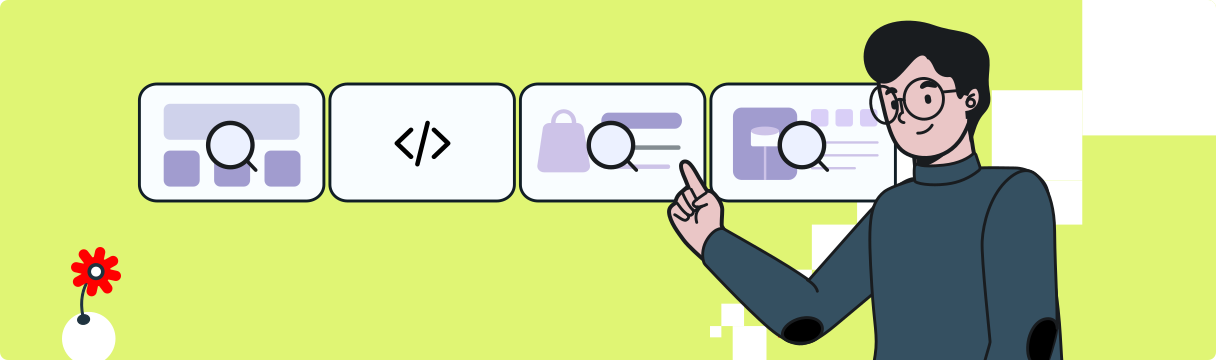
Real data, not guesswork
Our UX audits are grounded in real user behavior and conversion data. Recommendations are based on evidence, not assumptions or subjective opinions.
Proven experience
We work with clients in e-commerce, services, technology and other sectors. This experience allows us to tailor our approach to your specific needs and industry standards.
Clear improvement plan
You don’t just get a list of issues – you get a prioritized, actionable improvement plan. This makes it easier to allocate resources and implement changes step by step.
Integrated approach – UX, conversion and SEO
Our UX audits examine how user experience affects conversions and visibility in search results. The goal is to balance usability, business objectives, and digital reach.
Get a free UX consultation
Book a free consultation, and an eComStrive UX expert will conduct an initial usability assessment, identify conversion barriers, and outline practical recommendations to improve website performance and user experience.
What clients say about their experience


Our UX Audit Process – Step by Step
To maximize impact, we follow a structured and focused UX audit process. Each step helps identify what’s preventing users from reaching their goals and what needs to change.
01. Needs assessment
We start by understanding your business goals, customer needs, and existing challenges. This allows the UX audit to focus on what matters most and keeps it strategic, not just technical.
02. User behavior and data analysis
We analyze how users navigate the website and where they hesitate, get stuck, or drop off. This includes reviewing user paths, clicks, and behavioral data to identify conversion barriers.
03. UX evaluation
We review the website’s structure, navigation, design, content, and technical UX elements. This includes evaluating UX best practices and accessibility guidelines to determine whether the experience feels logical, clear, and easy to use.
04 Summary of identified issues
Identified issues are organized based on their impact on user experience and business goals. This makes it clear which problems are most critical and which improvements will deliver the greatest return.
05. Improvement recommendations
We provide clear recommendations to fix usability issues, prioritized so you can start with what matters most. Where helpful, we include examples and UX best practices relevant to your industry.

Key Benefits of a UX Audit
A quality UX audit gives you a clear view of your website’s strengths and weaknesses. This makes it easier to target UX improvements, increase customer satisfaction, and support stronger business results.
You understand your visitors
Understand how users navigate and interact with your site so content and features better match their needs. These insights help increase engagement and keep visitors on the site longer.
Simple, intuitive page navigation
We identify where users get lost or encounter obstacles and propose improvements. Clear navigation makes it easier for users to find what they need and reach key pages faster.
Fixing issue that limit growth
You receive a clear analysis of the key usability issues affecting your website, along with recommendations that can be acted on immediately.
Tailored improvement plan
You get a practical, prioritized improvement plan that shows what to fix and in what order, helping you use resources efficiently and focus on the highest-impact changes.
Consistent user experience across devices
We test your website across desktop, mobile, and tablet devices to evaluate usability and consistency on every screen.
Best practice UX solutions
You receive recommendations based on current UX best practices to support long-term usability and competitive performance.
Visitors who convert
Improved usability leads to higher customer satisfaction and loyalty. Users are more likely to return and recommend your services.
Higher conversion rates
Better user experience reduces drop-offs and cart abandonment, leading to more completed actions and higher conversion rates.
Lower maintenance costs
Addressing usability issues early helps avoid costly fixes later and makes long-term website maintenance more efficient.
Other Services

Website development
Our website development services deliver scalable, SEO-optimized WordPress sites built for performance, usability, and growth. Our sites are easy to manage and hard to outgrow.
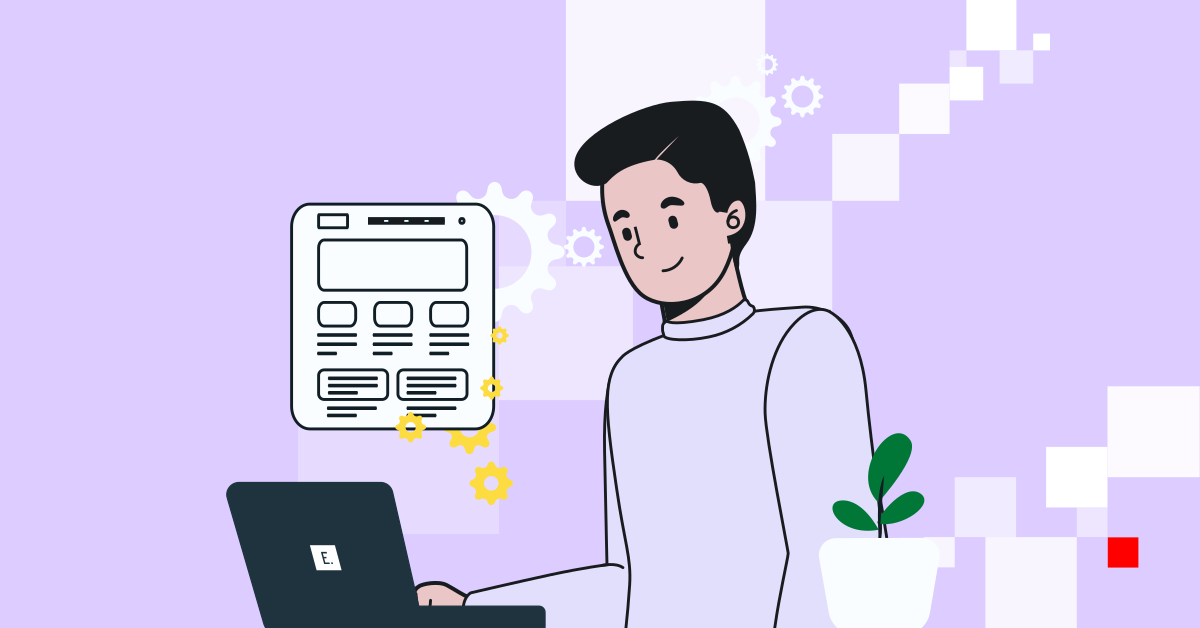
UX design
UX design services focused on page structure, interaction patterns, and user flow. We design interfaces that reduce confusion and support faster, clearer decisions.

Website design
Website design services that combine modern aesthetics with usability and conversion flows. Designed to attract the right audience and move them into action.
Frequently Asked Questions
Why do I need a UX audit if my website functions well?
Even if a website works technically, that doesn’t mean it’s easy or intuitive to use. A UX audit identifies friction points such as confusion, unnecessary steps, or unclear messaging that prevent users from completing actions like purchases or registrations.
How often should a UX audit be carried out to maintain a high level of usability?
For most websites, a UX audit should be conducted at least once a year or after major changes such as redesigns, feature launches, or significant content updates. Regular audits help catch usability issues early and keep the experience aligned with user expectations and evolving technology.
How long does it usually take to conduct a full UX audit?
A full UX audit typically takes between 1 and 6 weeks, depending on the size and complexity of the website. During this time, user behavior, analytics data, and usability findings are reviewed and analyzed.
What is the approximate cost of a UX audit?
The cost of a UX audit depends on factors such as website size, complexity, and the scope of analysis. Most UX audit services range from approximately $650 to $1,500.
The final price is determined after an initial consultation and needs assessment.
What are the most common problems that a UX audit reveals?
UX audits commonly uncover issues such as unclear navigation, poorly structured information, ineffective mobile experiences, slow page loading, and friction in contact forms or purchase flows. These problems often reduce engagement and prevent conversions.
What data and tools are used to conduct a UX audit?
Our UX audits use a combination of quantitative and qualitative data. This typically includes tools such as Google Analytics, Hotjar, Microsoft Clarity, heatmaps, session recordings, user testing, and direct user feedback. These insights help pinpoint usability problems and user behavior patterns.
Is UX auditing only for e-commerce sites?
No. UX audits are valuable for all types of websites and digital products, including service websites, SaaS platforms, corporate sites, content portals, and applications. Any digital experience with users can benefit from improved usability and clarity.
How does a UX audit affect SEO results?
A UX audit improves usability, clarity, and performance, all of which influence SEO. Search engines favor websites that load quickly, are easy to navigate, and provide a positive user experience. Improving UX can reduce bounce rates, increase engagement, and support stronger search visibility.
Sazinieties ar mums
Mūsu komanda priecāsies atbildēt uz visiem Jums interesējošiem jautājumiem. Aizpildiet kontaktu formu, un mēs ar Jums sazināsimies.