

















The Impact of UX Design
UX design is about removing friction from real user tasks. By improving page structure, navigation, and content clarity, users spend less time figuring things out and more time completing actions. The result is fewer abandoned carts, clearer decision paths, and better performance across key metrics.
+200%
Longer time on site thanks to clear structure and intuitive navigation.
-35%
Lower bounce rates by improving content hierarchy and visual clarity.
+60%
Higher conversions through user-friendly design
What is UX design?
UX design (user experience design) is the process of planning, structuring, and designing a website or application so it’s easy to understand, logical to use, and efficient for users.
It combines user behavior research, information architecture planning, interactive design, and visual design to help the user reach their goal quickly and easily. For businesses, this leads to clearer user journeys, fewer drop-offs, and better engagement.
The importance of UX design
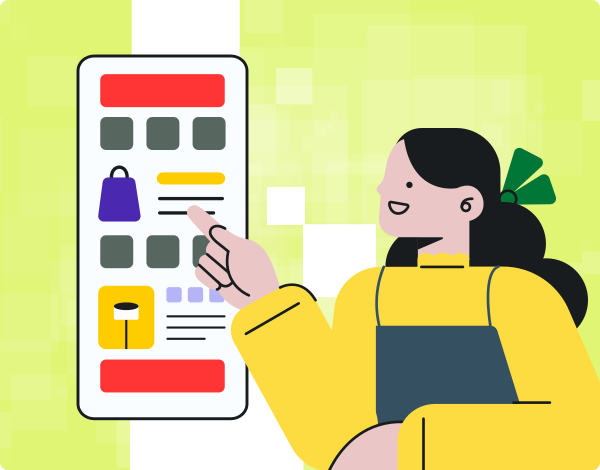
User experience design has a significant impact on how users perceive your business in the digital environment. If your website or application is easy to use, understandable and enjoyable, your customers will not only complete their purchase or intended action, they will come back and recommend your website to others.
End-to-End UX Design Services
We create a user experience that is intuitive. Information is easy to find, actions feel clear, and each step moves users closer to their goal. Websites and online shops that keep people coming back.
User needs research
We identify user goals and needs through interviews, surveys, observation, and data from analytics tools.
Information architecture
We plan the structure, navigation, layout, and content of the website so users can find what they need quickly and without friction.
User profile (personas)
We create user personas based on real data to clearly define the needs, behavior, and expectations of your target audience.
User journey
We model the sequence of user actions in specific scenarios to define system logic and identify potential bottlenecks.
Wireframes
We develop website concepts and wireframes that form the foundation for design decisions and functional structure.
We analyze the usability of the existing website, identify gaps, and provide clear recommendations for improvement.
How Does UX Design Help Your Business?
Well-designed UX helps your digital products feel clear, efficient, and easy to use for your target audience. This improves satisfaction, builds trust, and supports long-term business growth through better engagement and conversions.
Improved user involvement
UX design promotes an intuitive and pleasant user experience that keeps users engaged and reduces bounce rates. When users can quickly find what they need, they are more likely to stay and return.
Better funnel performance
By identifying and removing friction in the user journey, UX design makes key actions easier to complete, such as purchasing, signing up, or submitting a request.
Potential cost savings
Research and prototyping reduces the number of bugs and the need for changes later, which means less time and resources for technical support and development.
Stronger trust
A positive user experience builds confidence in your brand. Over time, this leads to repeat visits, repeat purchases, and recommendations.
Get a free personal consultation on UX design solutions for your website
Book a free UX consultation and get an expert review of your website, including usability issues, conversion blockers, and actionable recommendations for improvement.
What clients say about their experience


How Does the UX Design Process Work?
To deliver a user-friendly solution that supports your business goals, UX design follows a structured, focused process. Each step builds on the previous one to create a clear, usable, and effective user experience.
01. Needs assessment
We gather information about your business, target audience, and current user experience. This includes reviewing website usage data and identifying key challenges and opportunities.
02. Modelling user profiles and behaviour
We develop user profiles and summarize key usage scenarios. This helps us understand how and why users interact with your digital product.
03 Information architecture and process flows
We create a logical structure of content and functionality. We map userflows to provide intuitive and targeted experiences.
04. Wireframe development
We create wireframes that show how the website or application will work. These concepts allow us to test ideas and validate structure before development begins.
05. Alignment and improvements
Each stage is reviewed with the client. Based on feedback, we refine and adjust solutions to ensure they meet both user needs and business objectives.
Basic Principles of UX Design
Good UX doesn’t happen by accident. It is built on clear user experience principles that help create websites that are easy to use, easy to understand, and designed around real user needs. Below are the most important aspects that ensure a high-quality website user experience.
Clear structure and actions
UX design helps organize page content and actions so users always know where they are and what to do next. A clear structure makes the website easier to understand and more enjoyable to use.
Reducing confusion early
UX analysis helps identify unclear labels, unnecessary actions, and other sources of user confusion early on. This keeps users focused and supports completion of the intended action.
User behavior
UX design is also grounded in how people actually use your website. By studying user behavior, we can identify where users hesitate or drop off and make decisions based on real data.
A customizable solution
UX design prioritizes the content and actions that are most important to users. Key information is easy to find, without forcing users to search or guess where to go next.
Stronger competetive position
In a digital environment where decisions are made quickly, a clear and intuitive user experience becomes a competitive advantage. When a website feels faster and easier to use, users are more likely to stay and engage.
Building trust
A well-structured and thoughtfully designed website helps users feel confident in the business behind it. Clear UX supports positive first impressions and makes decisions like purchasing or contacting a company easier.
UX and UI Design – Key Differences
UX (user experience) and UI (user interface) are often mentioned together, but they describe different, complementary parts of design. Both are essential for creating a successful digital product such as a website, app, or platform. Below are the main differences.
01. UX Design – User Experience
UX design covers the entire user journey, from the moment someone enters a website to completing a specific action. It includes information architecture, navigation, functionality, and overall user logic. The goal of UX design is to make the experience simple, clear, and easy to complete.
Example: In a booking system, good UX means users can quickly understand how to choose a date, add details, and confirm a reservation without confusion or unnecessary steps.
Strong UX improves how efficiently a system works and how comfortable it feels to use. It’s a strategic, process-driven effort aimed at improving overall user satisfaction.
02. UI Design – User Interface
UI design focuses on visual and aesthetic elements such as colors, shapes, images, icons, typography, and layout. Its role is to make a website or app visually clear and appealing while supporting functionality.
Example: Well-designed UI includes a balanced color palette, clear buttons, readable fonts, and a consistent visual style across the entire page. This creates a professional and trustworthy impression.
UI is what users see and perceive at first glance. It’s the visual language that communicates the structure and logic created through UX design.
Other Services
Website development
Our website development services deliver scalable, SEO-optimized WordPress sites built for performance, usability, and growth. Our sites are easy to manage and hard to outgrow.
UX audits
Our UX audits explain why users hesitate, abandon, or disengage from your site. Get clear insights paired with practical remediation steps.
Website design
Website design services that combine modern aesthetics with usability and conversion flows. Designed to attract the right audience and move them into action.
Frequently Asked Questions
What defines good UX design?
Good UX design makes a website intuitive, clear, and easy to use. Users can find information quickly, understand the structure, and complete actions without issue – whether it’s a purchase, a booking, or communication with your business.
What value does UX design bring to business?
UX design helps attract, retain, and convert visitors into customers. For businesses, this means higher conversion rates, better customer satisfaction, and stronger results without relying heavily on additional advertising. UX design also supports brand trust and long-term customer loyalty.
How does UX design help the user?
UX design provides a more user-friendly and comprehensible experience. Users don’t have to guess where to click or what to do next. Clear flows and logical structure help people make decisions faster, avoid frustration, and feel confident using the website.
What does UX design mean?
UX (User Experience) design is about planning and improving how users interact with a website or application. The goal is to create an environment where tasks can be completed easily, clearly, and confidently, with minimal effort from the user.
What is UX and what is UI?
UX (user experience) describes how a person feels when using a website or app – how clear, easy, and efficient it is to use. UI (user interface) is what the user sees, including colors, buttons, layout, and visual elements.
UX relates to how the product works, while UI relates to how it looks.
How does UX design help business?
UX design turns websites and applications into effective business tools. It reduces confusion, improves task completion, increases conversions, and lowers bounce rates. The result is stronger performance, a better brand image, and improved return without increasing marketing spend.
How does UX design work?
UX design starts with research and analysis of user needs. Designers study how people interact with a website or app, identify friction points, and create solutions to improve usability. This process includes prototyping, testing, feedback, and continuous improvement to deliver better user experiences over time.
Get in touch with us
Our team will be happy to answer any questions you may have. Please fill out the contact form, and we will get in touch with you.